
The pursuit of success is omnipresent. Society remains captivated by a toxic achievement culture that exalts perpetual ambition and unyielding productivity. The societal pressure to achieve can undermine self-worth and create feelings of inadequacy. This pervasive mindset equates self-worth with external accomplishments and compels the relentless pursuit of accolades, neglecting their toll on mental and physical health. As individuals negotiate this demanding terrain, they must pause, scrutinize, and redefine success on personal terms—beyond societal impositions.
Deconstructing the Genesis of Hustle and Achievement Ethos
To unravel the modern ethos of hustle culture, an examination of its genesis is critical—tracing back to Silicon Valley’s tech boom during the late 1990s and early 2000s. This hub catalyzed new paradigms: The Self-made Entrepreneur as an emblem of prosperity, propelled by narratives of swift triumphs in business ventures. The prevailing belief that rigorous effort and unrelenting dedication unlock prosperity became gospel.
Social media platforms amplified these narratives, transforming hustle culture into a ubiquitous narrative. Figures like Elon Musk and Gary Vee epitomized modern achievement, reinforcing the conviction that continuous grind is essential for significance. In this narrative, leisure was deemed diversionary. However, research and personal testimonies reveal the exorbitant costs linked to this ideology.
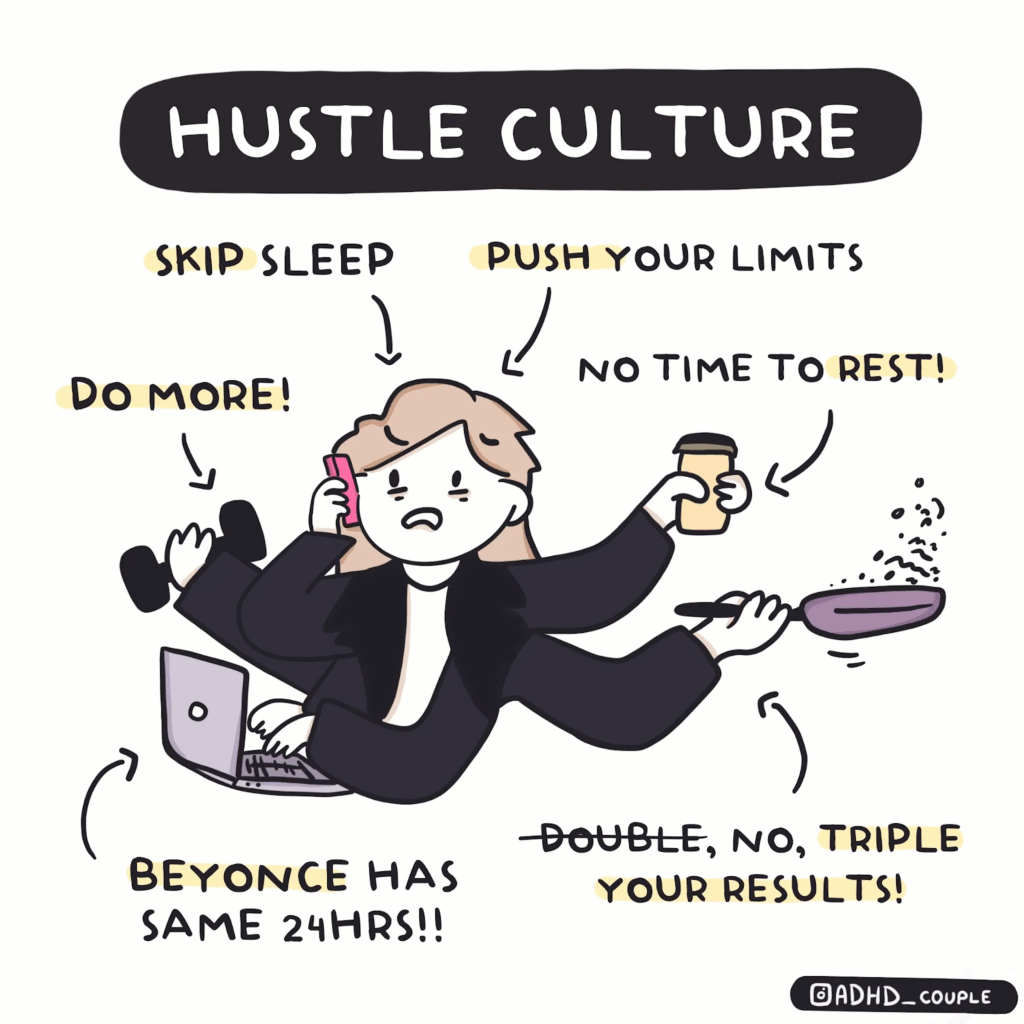 Image Source: Echo Media
The Adversities of a Success-Driven Milieu
The ramifications of a success-oriented society, fueled by hustle culture, extend beyond mere fatigue. By endorsing a monolithic view of success—focused predominantly on financial gain, status, and prestige—individuals often find themselves ensnared in high-stress environments void of the equilibrium requisite for sustained success. Frequently, work monopolizes focus, relegating personal fulfillment. Consequently, mental health becomes precarious.
Hustle culture’s accolades often cloak its corrosive underside, wherein prolonged stress and extensive work hours culminate in reduced productivity. A 2022 survey by Deloitte revealed that 70% of C-Level executives contemplated abandoning their positions for roles that favored well-being, signaling pervasive discontent even at professional zeniths. Additionally, over 40% of employees feel exhausted, stressed, and overwhelmed.
Dissecting Toxic Productivity and Self-Worth Exploitation
Toxic productivity, a derivative of achievement addiction, predicates the constant need to validate one’s existence through relentless output. This creed nurtures an unhealthy psyche whereby personal perception is intricately linked to success, propagating a cycle of inadequacy and rivalry.
The psychological implications are substantial. According to a study published by Stanford University, productivity falls significantly after 55 hours of work per week—an excess conventional within hustle culture. Additionally, 70% of students believe their parents valued them more if they were successful in school. This societal validation often anchors individuals’ perceptions of worthiness.
Psychologist Jennifer Breheny Wallace highlights a prevalent mindset among youth equating parental love to achievements, correlating directly with soaring anxiety and depression rates in contemporary society. High-achieving students are 2 to 6 times more likely to suffer from clinical levels of anxiety and depression than the average American teen.
Harmonizing Personal Fulfillment with Professional Aspiration
Navigating the ambitious landscape sculpted by hustle culture necessitates reconciling professional aspirations with personal fulfillment. To alleviate perpetual hustle’s consequences, redefining success becomes imperative—shifting from external validations to intrinsic satisfaction.
In “Leisure: The Basis of Culture,” Josef Pieper asserts that genuine fulfillment stems from activities aligned with core values and passion. Allocating time for rejuvenating pursuits—hobbies, social connections, leisure—is crucial rather than succumbing to exploitation.
Ambition must integrate mindfulness, preserving life’s deeper pleasures while pursuing success. Transitioning from burnout to meaningful engagement isn’t about discarding goals; it’s about reshaping them for a balanced, thriving existence.
Recalibrating Success Through Individual Values and Affinities
Adopting a personal definition of success can transform life experiences fundamentally. Shedding societal directives of achievement empowers individuals to articulate success on their terms, resulting in profound and fulfilling life choices.
Rather than aspiring to societal standards, thriving individuals achieve fulfillment by adhering to personal convictions and passions. A proactive value reevaluation underscores a holistic approach where personal growth and constructive impact eclipse metrics of wealth and status.
Success must transcend conventional benchmarks, encompassing experiences fostering personal development and socially constructive endeavors. Hustle Culture promotes an unhealthy disregard for personal values and passions. Listing pursuits that invigorate and resonate with one’s true self can pave the path to redefining success, fostering genuine satisfaction.
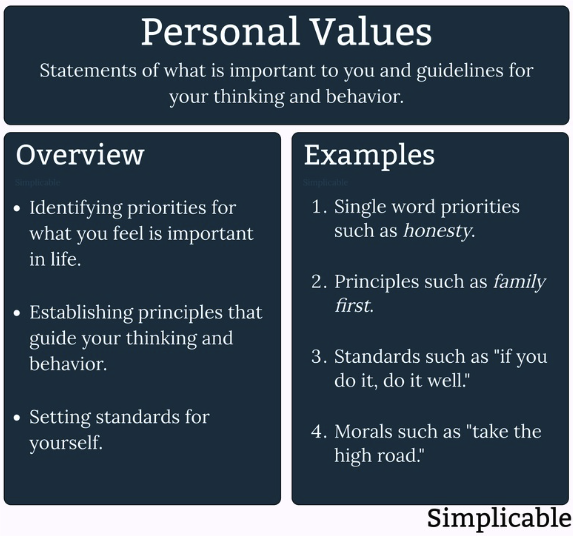 Image Source: Simplicable
The Influence of Social Media in Disseminating Hustle Ideals
Social media plays a critical role in propagating hustle culture and achievement pressures. Instagram, LinkedIn, and TikTok feature narratives extolling tireless endeavor as the ultimate fulfillment conduit. While these stories may inspire, they propagate unrealistic expectations of perpetual success, embedding the notion that self-worth parallels achievement.
Interacting with these platforms necessitates mindful consumption, discerning genuine inspiration from anxiety-inducing comparisons—averting entrenchment in toxic achievement paradigms.
Recognizing Burnout Symptoms in Overachievers
Identifying burnout within hustle-driven culture is vital. Hallmarks include chronic fatigue, emotional depletion, and diminished productivity, often overlooked by overachievers blinded by ambition or failure aversions until too late.
Stanford research highlights the correlation between extensive work hours and declining productivity, underscoring burnout’s internal and external manifestations. Early recognition and fostering supportive work environments are essential in mitigating mental health ramifications, enabling individuals to establish boundaries prioritizing well-being over productivity metrics.
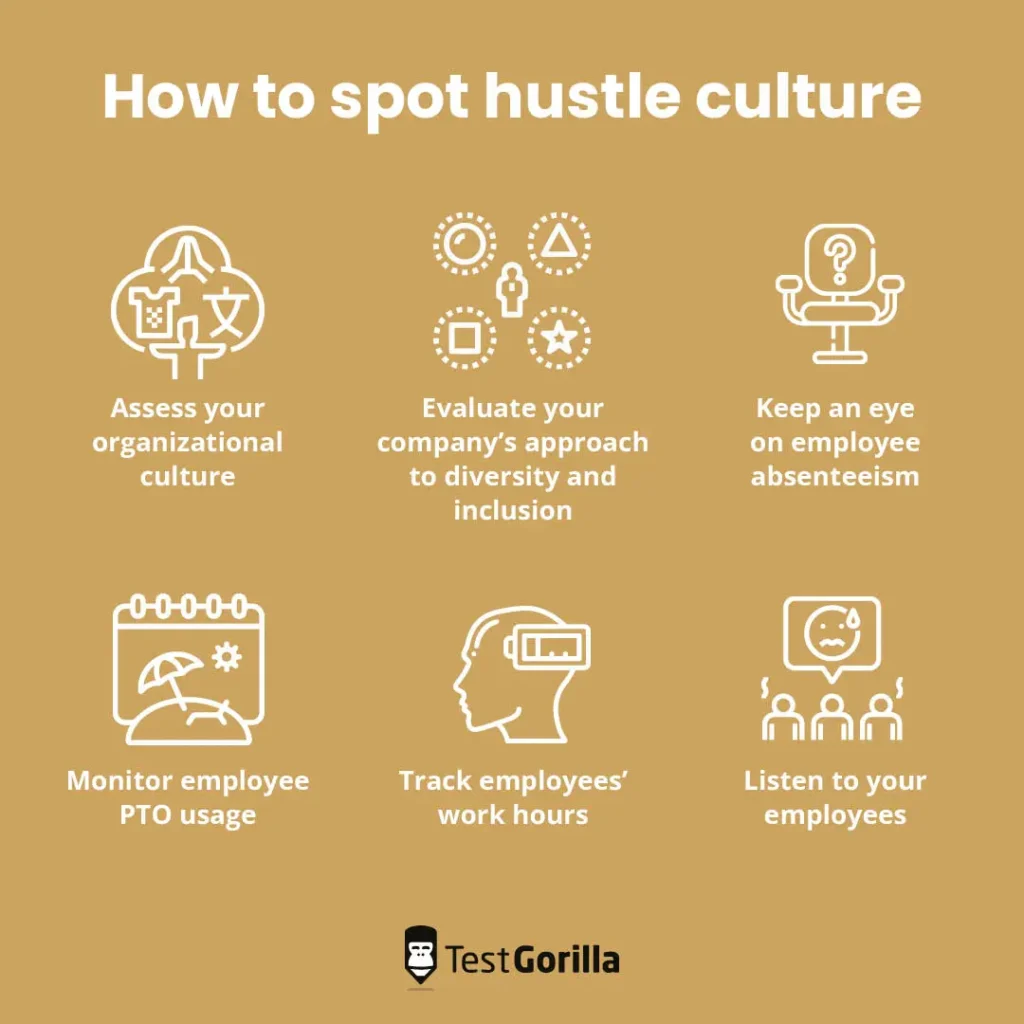 Image Source: TestGorilla
Lessons in Building a Life Centered on Well-Being
Embracing a life centered around well-being mandates courage to dismantle pervasive myths inherent in hustle culture and achievement addiction. Shifting from achievement-based identity to a balance-centered existence fosters authenticity aligned with true desires.
This shift advocates celebrating personal milestones, nurturing friendships, and engaging in enriching hobbies—efforts that enhance mental health and abate stress. Perceiving work as life’s component, not its entirety, offers empowerment and autonomy.
Strategies for Cultivating a Healthful Work Relationship
Transforming work relations necessitates an intentional mindset evolution. Redefine success through personal goal setting reflecting values and passions, not societal expectations. Establish boundaries safeguarding mental health through allocating personal time and differentiating work from leisure.
Organizations significantly contribute to this change, creating environments prioritizing employee well-being above mere productivity—acknowledging long-term benefits of a content, healthy workforce.
Constructing Support Networks for Sustainable Success
Achieving sustainable success requires cultivating a support network that shares and reinforces personal values, facilitating growth. Close relationships and community support buffer against achievement culture pressures.
Embracing mentors and colleagues who inspire while advocating balanced lifestyles cultivates an environment conducive to thriving personally and professionally.
In summary, transitioning from hustle to human involves reevaluating entrenched success notions, prioritizing well-being, and redefining life’s purpose beyond a toxic achievement culture. Though arduous, the transition begets immeasurable rewards—fulfillment, equilibrium, and authentic significance. Embrace this paradigm shift, and rewrite success on your unique terms.