
Leaders are often confronted with challenges that don’t come with a playbook. Market dynamics change overnight, technologies disrupt established norms, and teams face problems no one has solved before. In this context, one leadership skill rises above many others: the ability to figure things out.
This isn’t about having all the answers. It’s about cultivating the resourcefulness, resilience, and adaptability to chart a path forward when the way isn’t obvious. Leaders who master this skill create clarity for themselves, their teams, and their organizations—even in the midst of ambiguity.
Why “Figuring Things Out” Matters Now More Than Ever
Not long ago, professional success was tied closely to expertise. Leaders were promoted because they had mastered their craft, could provide the right answers, and were seen as dependable authorities. While expertise still matters, it’s no longer enough.
Today’s challenges are unprecedented. AI-driven disruption, global interdependence, complex stakeholder ecosystems, and shifting employee expectations all combine to create situations no leader has encountered before. In such an environment:
- Ready-made answers are increasingly rare.
- Playbooks quickly become outdated.
- The pace of change requires leaders to act without perfect information.
The leaders who thrive are not those who rely on certainty, but those who lean into uncertainty with curiosity.
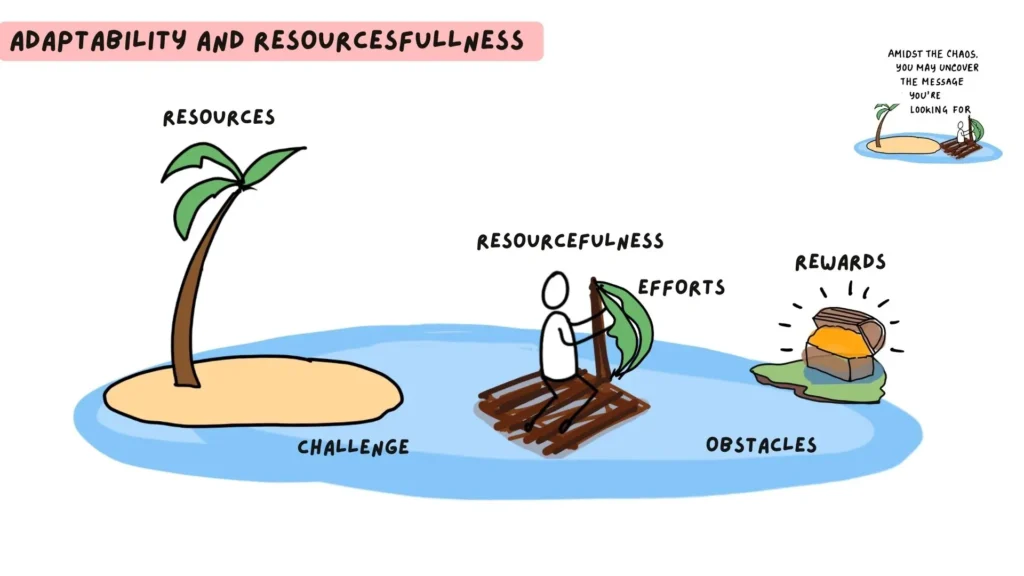 Image Source: Visual Thinking School
Ready Answers vs. The Capacity to Work Through Ambiguity
There’s a crucial distinction between knowing the answer and knowing how to figure it out.
- Relying on ready-made answers creates dependency. Leaders wait for direction, look for precedent, or defer to “how it’s always been done.” This approach stalls innovation and keeps organizations stuck in the past.
- Developing the capacity to figure it out builds independence and resilience. Leaders ask better questions, tap diverse perspectives, and experiment with possible paths forward. They see ambiguity not as a threat but as an opportunity.
The shift from “answer-giver” to “sense-maker” defines modern leadership.
The Link Between Resourcefulness and Leadership Effectiveness
Leadership Circle’s research shows that effective leadership isn’t just about technical skills—it’s deeply connected to creative competencies such as achieving results, systems thinking, and courageous authenticity. The ability to figure things out threads through all of these.
- When leaders figure things out, they model composure under uncertainty, inspiring confidence in their teams.
- They cultivate a culture of learning and experimentation, reducing fear of failure.
- They help organizations adapt more quickly, building strategic agility in the face of disruption.
In essence, resourcefulness transforms leaders into catalysts of growth—within themselves, their teams, and their organizations.
Barriers to Developing This Skill
Despite its importance, many leaders struggle to strengthen this capability. Common barriers include:
- Overreliance on expertise – A belief that “I should already know this” can prevent leaders from asking questions or exploring unknown territory.
- Fear of failure – When mistakes are punished, leaders avoid risk and default to safe (but stagnant) solutions.
- Perfectionism – The drive to get things exactly right before acting often leads to paralysis.
- Delegation as avoidance – Passing complex problems down the line instead of engaging with them robs leaders of the chance to grow.
Recognizing these patterns is the first step toward overcoming them.
How Organizations Benefit When Leaders Figure Things Out
When leaders and teams develop this skill, the benefits ripple across the organization:
- Greater resilience: Teams bounce back faster from setbacks because they’re accustomed to problem-solving in uncertain conditions.
- Faster innovation: Leaders willing to “try, test, and learn” unlock creative solutions that rigid, rules-bound approaches can’t.
- Distributed leadership: Teams feel empowered to tackle challenges themselves rather than waiting for top-down direction.
- Talent development: Emerging leaders learn by doing, which builds confidence and readiness for greater responsibility.
Ultimately, organizations that value resourcefulness outperform those that cling to predictability.
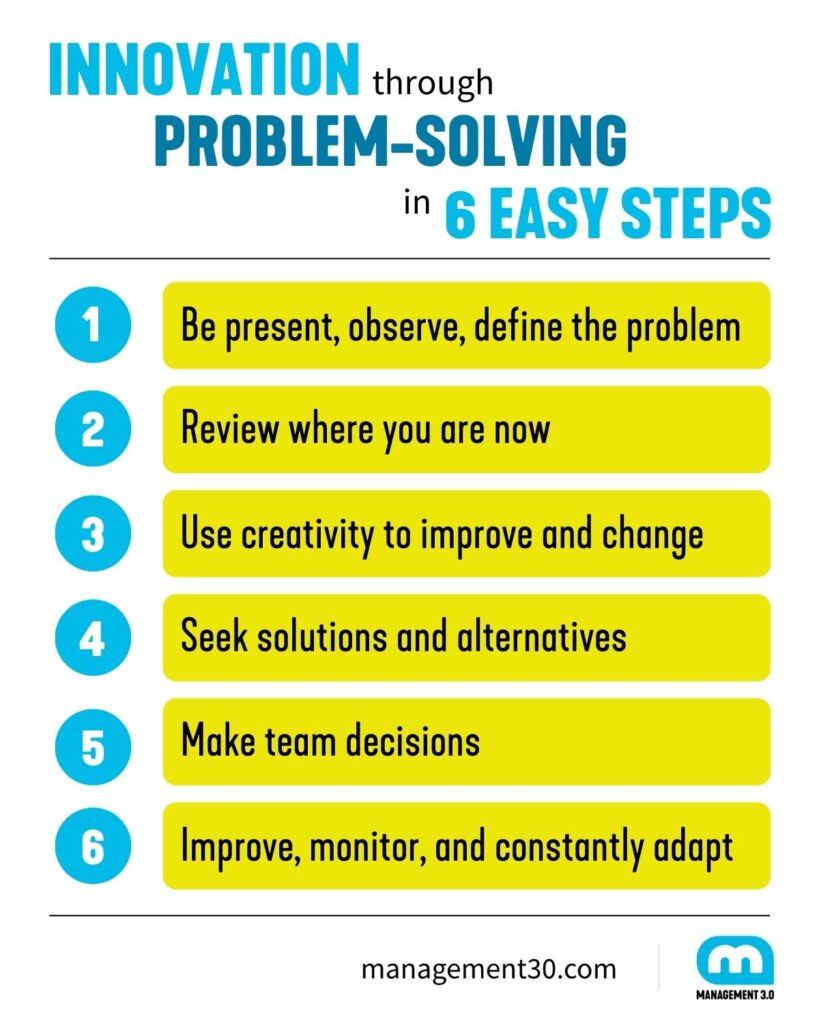 Image Source: Management 30
Practical Strategies for Strengthening the Skill
So how can leaders cultivate the ability to figure things out—both in themselves and in their teams?
- Reframe Ambiguity as Opportunity
Instead of seeing uncertainty as a deficit, view it as a chance to create. Ask yourself: “What does this situation make possible that a clear answer would not?”
- Practice “Micro-Experiments”
Rather than waiting for the perfect plan, take small, low-risk steps forward. Test, learn, and adjust. This builds momentum while reducing fear of failure.
- Ask Better Questions
Shift from “What’s the answer?” to “What’s the real problem we’re trying to solve?” or “What assumptions need to be tested?” Great problem-solving begins with great questions.
- Embrace Collective Intelligence
Invite multiple perspectives—especially from those outside your usual circle. Diverse inputs often lead to novel solutions you couldn’t generate alone.
- Normalize Learning from Failure
Publicly share not only successes but also what you learned from setbacks. When leaders model this, teams feel safe to take smart risks.
- Build Resource Networks
Knowing who to turn to is often as important as knowing what to do. Cultivate relationships across industries, functions, and communities that you can draw on when facing the unfamiliar.
- Develop a Tolerance for Discomfort
Figuring things out often feels messy and unresolved. Strengthen your capacity to sit with discomfort without rushing to premature solutions.
Bringing It All Together
Leaders who cultivate their capacity to figure things out build resilience, foster innovation, and inspire confidence. Organizations that encourage it unlock the full potential of their people.
The next time you find yourself staring down at an ambiguous challenge, pause before asking for the answer. Instead, lean into the process of discovery. Gather perspectives, experiment, learn, and adjust. Over time, this practice becomes not just a skill, but a mindset—a way of leading that transforms uncertainty into possibility.
At Leadership Circle, we believe that developing the capacity to figure things out is central to leadership effectiveness. Explore how the Leadership Circle Profile can help you identify and grow the creative competencies that fuel resourceful, adaptive leadership.





Thank you for the clear roadmap — it makes the process less intimidating.
Good read — the key takeaways were especially helpful.
Nice guide — the tips are simple but effective. Thanks!
I never thought about it this way before. Your post gave me a fresh perspective.
I appreciate the balanced view — you didn’t oversell the solution.
Thanks for meaningful impact
Nice balance of theory and practical advice. Well done!
I love the personal examples — they made the advice relatable.
This content perfectly combines entertainment with valuable life insights and practical wisdom
I’m absolutely loving the practical approach you took with this article! Too many posts on this topic are all theory with no actionable advice, but you delivered exactly what readers need to actually make progress. The templates and examples you provided are incredibly helpful, and I’m definitely going to be using them. Your generosity in sharing these resources is really appreciated. This is the kind of content that builds trust and keeps readers coming back!
This helped me a lot, appreciate it!
Very clear explanation, easy to understand.
I appreciated the formatting — easy to skim and still informative.
Thanks for breaking this down into simple steps — very useful.
I appreciate the real-world examples you included — they made the concept click.
Wow, I wasn’t expecting to spend my entire lunch break reading this, but here we are! Your writing style is so engaging that I completely lost track of time. I love how you managed to tackle such a complex topic without making it feel overwhelming or too technical. The personal anecdotes you wove throughout really helped illustrate your points beautifully. I’ll be bookmarking this one to come back to later. Do you have any recommendations for further reading on this subject?
Your writing is not only informative but also incredibly inspiring. You have a knack for sparking curiosity and encouraging critical thinking. Thank you for being such a positive influence!