
Many leaders who were once labeled “gifted” as children grow up carrying invisible pressure…a need to constantly prove their worth. They’ve been high performers their whole lives, yet deep down, many still wrestle with an exhausting sense that they’re not enough.
To understand why, it helps to look at how early giftedness shapes adulthood—and how those childhood narratives of achievement, pressure, and perfection often follow us into leadership.
Giftedness and the Leadership Paradox
Gifted children often grow into adults who think quickly, solve complex problems, and naturally rise to leadership roles. Their sharp intellect and drive make them exceptional performers.
But those same strengths can also create blind spots. Approximately 5% of the population is considered gifted; and within that group, many struggle with anxiety, burnout, and difficulty letting go of control. The pressure to keep proving their worth can make delegation feel impossible. Micromanagement, overwork, and self-criticism become coping mechanisms for maintaining the “gifted” identity that once defined them.
When the Mind Outpaces the Heart
Gifted individuals often experience what psychologists call asynchronous development: their intellectual growth outpaces their emotional development. Gifted students often struggle with social skills and emotional well-being despite academic success. As adults, this mismatch can show up as sharp analytical thinking paired with emotional overwhelm or indecision.
A leader may be brilliant at solving strategic problems but freeze when faced with interpersonal tension. They may overthink simple feedback or struggle to balance empathy with performance demands. The result is often a subtle sense of disconnect—knowing what to do, but not always feeling emotionally aligned to do it well.
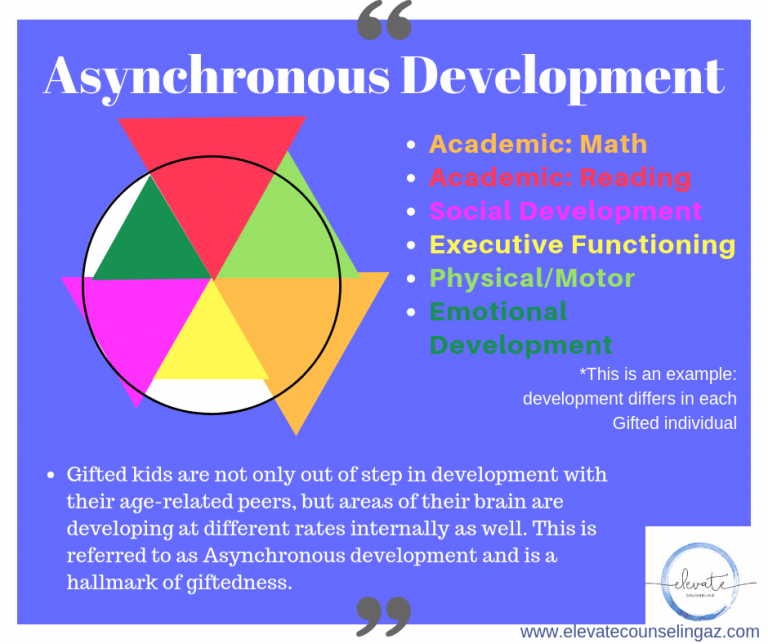 Image Source: Elevate Counseling AZ
The Gift and Cost of Sensitivity
Research suggests that up to 87% of gifted adults qualify as highly sensitive people (HSPs). This heightened perception can be an incredible leadership asset: they notice nuances others miss, anticipate team dynamics, and pick up on unspoken tension in meetings.
But that same sensitivity can also be draining. Constantly absorbing others’ emotions, taking feedback personally, or overanalyzing small interactions can lead to emotional fatigue and burnout. Mindfulness practices, exercise, and firm recovery boundaries aren’t luxuries for these leaders. They’re essential for staying centered and resilient.
Perfectionism: The Double-Edged Sword
Perfectionism is a hallmark of the gifted experience. It fuels high performance but can quietly erode mental health. Many gifted adults internalized the message early on that achievement equals love and belonging—so mistakes feel like personal failures, not learning opportunities.
In leadership, that mindset becomes costly. A perfectionist leader often hesitates to take risks, delegate, or innovate out of fear that something will fall short. Over time, that relentless pursuit of flawless performance leads to chronic stress and team stagnation.
The healthiest leaders learn to reframe perfectionism into pursuit of excellence; high standards balanced by compassion, curiosity, and trust.
The Gifted Imposter
It’s ironic, but true: gifted leaders often feel like imposters. Despite a lifetime of accomplishments, they secretly believe they’ve just been lucky — that sooner or later, everyone will realize they’re not as capable as they seem.
This imposter syndrome is deeply tied to childhood narratives. When success was constantly rewarded, failure became unacceptable. Many leaders learned to downplay achievements or credit their success to timing, mentorship, or “just working hard.” Over time, that self-doubt becomes a mental habit that undermines confidence, risk-taking, and visibility.
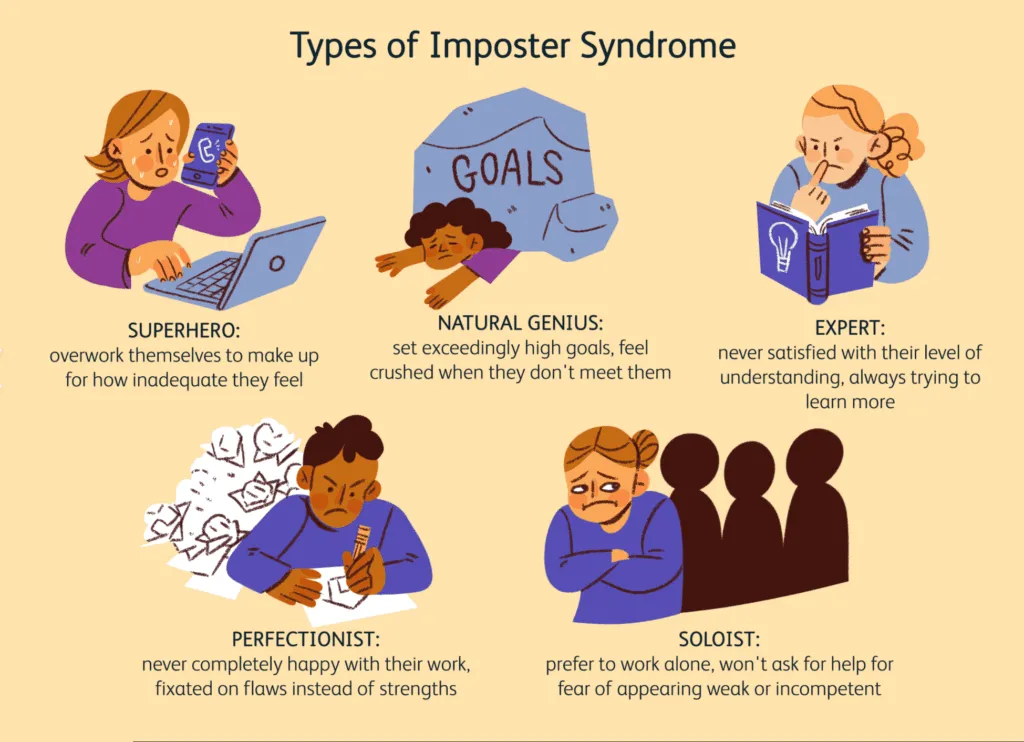 Image Source: Inspired Experiences
How School Shaped the Story
School experiences play a powerful role in shaping how gifted adults view achievement. Gifted programs often reward quick answers and measurable success but rarely teach emotional resilience, collaboration, or rest.
Many gifted kids learned to equate praise with performance. As adults, they carry that conditioning into the workplace: chasing recognition, fearing failure, and tying their self-worth to outcomes. Without intentional unlearning, that cycle leads to exhaustion, disconnection, and eventually, burnout.
When Success Still Feels Like Underachievement
One of the quiet struggles of gifted adults is feeling perpetually “behind,” even when they’re objectively successful. They may look accomplished to everyone else; running teams, building companies, earning accolades…yet feel they haven’t reached their potential.
This gap between external success and internal satisfaction stems from internalized expectations. As children, their worth was measured by output. As adults, that bar keeps moving higher. Redefining success around fulfillment, creativity, and meaningful impact—rather than external validation—becomes the only sustainable path forward.
Burnout: The Breaking Point
Gifted adults are uniquely prone to burnout. Their ambition, sensitivity, and perfectionism combine into a potent cycle of overcommitment and emotional depletion. They don’t just work hard, they often feel responsible for fixing everything.
Recognizing early signs like chronic fatigue, irritability, and loss of motivation is crucial. Mindfulness, therapy, realistic goal setting, and intentional rest aren’t signs of weakness; they’re prerequisites for long-term performance. Leaders who model boundaries give their teams permission to do the same, creating cultures of health rather than martyrdom.
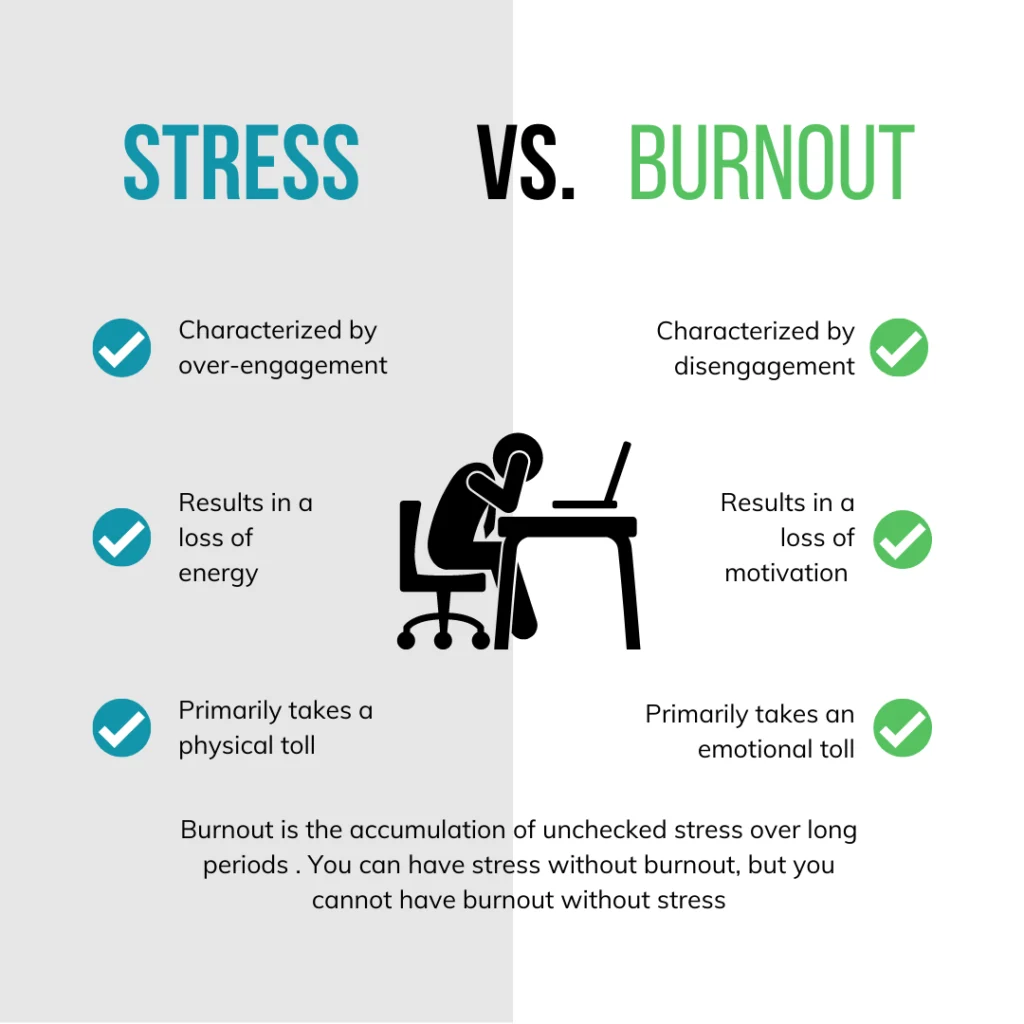 Image Source: Coach Ellyn
Redefining Self-Worth
For many gifted adults, the journey toward balance begins with separating identity from achievement. You are not your résumé. You are not your latest metric.
Self-compassion, reflection, and therapy can help reframe failure as feedback rather than proof of inadequacy. Pursuing hobbies, friendships, and passions outside work builds emotional breadth and reminds gifted adults they are whole people, not just high performers.
Existential depression—the sense that life’s meaning is slipping away despite success—is common among gifted adults. Exploring purpose beyond productivity, through service, creativity, or spiritual growth, can rekindle genuine fulfillment.
The Power of Connection
Finally, gifted leaders need community: mentors, peers, or therapists who understand the nuances of high sensitivity and high capability. Isolation reinforces self-doubt; connection builds resilience.
Therapy specifically tailored for gifted adults can be transformative, offering tools to navigate intensity, imposter syndrome, and perfectionism. Within organizations, leaders can cultivate psychologically safe cultures where imperfection and learning are normalized…a vital shift for sustainable growth.
A New Kind of Leadership
Gifted children grow into adults with extraordinary potential; but often, they’re still trying to earn their right to rest. The work of leadership, then, is not just to lead others but to lead oneself out of the endless loop of proving and into a life defined by authenticity, purpose, and enoughness.
Because when gifted leaders finally learn that they are enough, they unlock something far greater than achievement — they unlock true influence.