
Early in my career, I was the only woman in a sea of male colleagues. At one point, I was literally outnumbered 60 to 1, and admittedly…the risk of feeling unheard and unseen was high. I also often worried about the opposite probability, where everything I said or did could be highly scrutinized because I was the “different one” in a group of similar people.
While I have dealt with some condescension and sexism throughout my career, I’m pleased to report that in the specific job to which I am referring…I felt included, appreciated, and understood. I believe that is a direct result of the work that was being done with mid-level managers and the executive leadership team at this organization. The company was made up of mostly white, middle-aged men, however they were aware that this dynamic could be problematic and wanted to shift the forward direction of the org however they could. They also were open about discussing the challenges they faced in the male-heavy industry and predominantly white region in which that business worked. This openness gave me a safe space to offer another perspective, even as a junior employee, and gave us as a group the opportunity to ideate and plan for a more diverse company future.
Inclusive leadership is not about grand gestures or glossy DEI statements. It’s about what happens in small, everyday moments—whose voices are heard, whose perspectives are valued, and whose potential is unleashed. Inclusive leadership isn’t just the right thing to do—it’s the smartest way to lead in a world where innovation, agility, and human connection drive success.
Why Inclusive Leadership Is a Strategic Imperative
Decades of research prove what many of us have felt intuitively: diverse teams outperform homogenous ones. Deloitte found that inclusive teams are six times more likely to innovate and twice as likely to meet or exceed financial targets. McKinsey’s data shows companies with diverse leadership are more profitable.
But here’s the deeper truth: inclusivity isn’t just about metrics—it’s about human energy. When people feel safe, seen, and valued, they bring their full selves to work. They take risks, share ideas, and contribute creativity.
 Image Source: Amazon
What Inclusive Leadership Really Looks Like
Inclusive leadership isn’t soft. It’s not about pleasing everyone or avoiding conflict. In fact, it’s often harder. It requires leaders to sit in discomfort, challenge their assumptions, and choose courage over convenience.
Let’s make it tangible. Think of these contrasting scenarios:
- The Manager Who Listens Selectively: In meetings, they default to a handful of “trusted voices.” Others stop speaking up because they know their words won’t change the outcome.
- The Leader Who Listens Intentionally: They pause after the usual voices weigh in and ask, “Who haven’t we heard from yet?” They recognize that innovation often comes from the quietest corner of the room.
The difference? One leads by habit. The other leads inclusively.
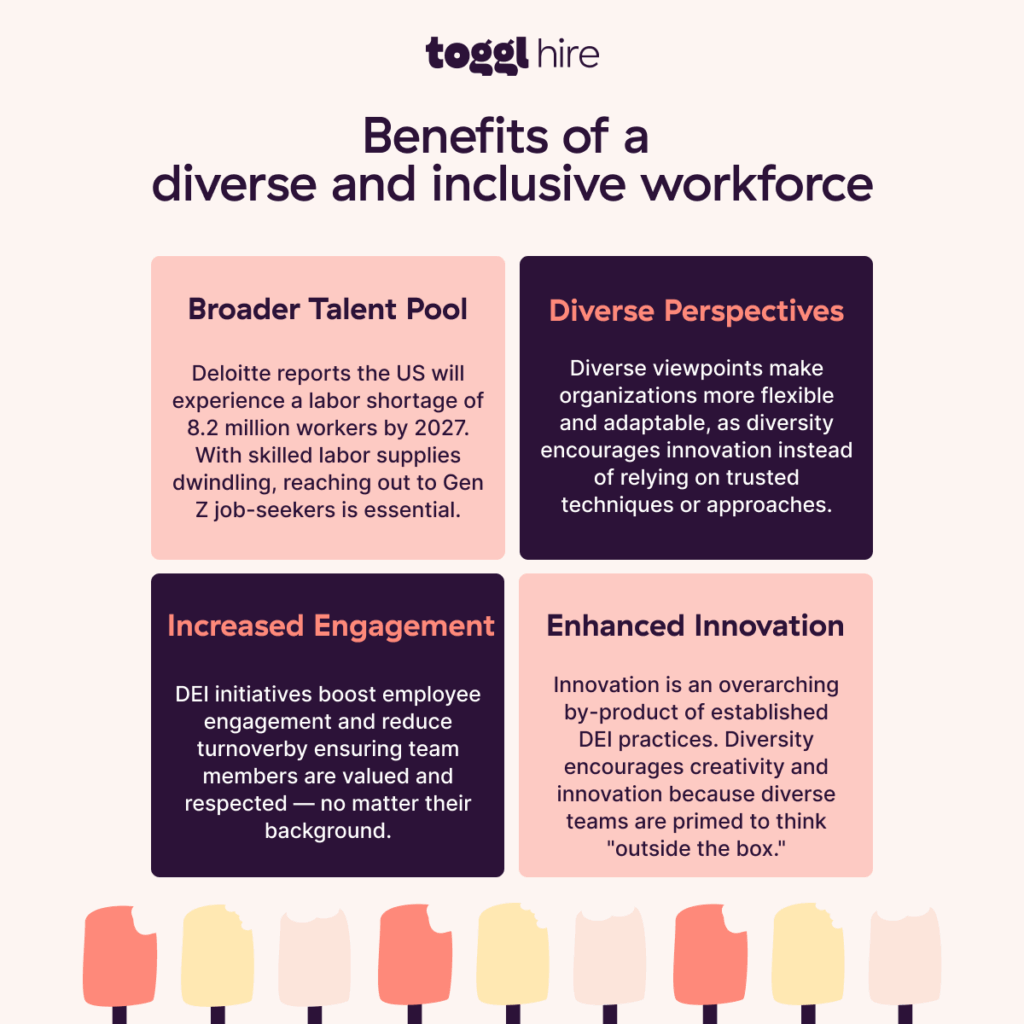 Image Source: Toggl
The Six Practices of Inclusive Leaders
Through research and practice, six behaviors consistently show up in leaders who create inclusion. Each one is both a mindset and a muscle—a way of thinking and a habit of acting.
- Commitment to Inclusion
Inclusive leaders don’t treat inclusion as an initiative; they weave it into the fabric of strategy. Satya Nadella, CEO of Microsoft, has spoken openly about how his son’s disability changed his leadership lens. His personal commitment shaped Microsoft’s broader culture shift toward empathy and accessibility—moves that have fueled the company’s resurgence.
Action: Tie inclusion goals to business goals. Make it clear they’re not side projects—they’re central to success.
- Cultural Intelligence
We all carry unconscious lenses shaped by our upbringing, culture, and worldview. Leaders with cultural intelligence intentionally widen those lenses. They don’t assume their perspective is universal.
Action: When making a decision, ask: “How might someone from a different culture, gender, or generation interpret this?”
- Empathetic Listening
Inclusive leaders listen to learn, not to fix. When an employee describes feeling excluded, an empathetic leader doesn’t rush to explain or defend—they sit with the discomfort, acknowledge the reality, and ask, “What can I do differently?”
Action: Practice reflective listening: restate what you’ve heard before adding your own view.
- Challenging Bias and Systems
Inclusive leaders don’t just work on their own biases—they challenge the systems around them. Consider the NFL’s Rooney Rule, which was designed to ensure minority candidates were interviewed for head coaching jobs. Imperfect as it is, it illustrates how systemic changes can shift access to opportunity.
Action: Audit one system (hiring, promotion, feedback). Ask: Does this process unintentionally favor one group?
- Accountability in Action
Talk without action erodes trust. Inclusive leaders measure progress, set transparent goals, and hold themselves accountable.
Action: Review diversity and engagement metrics with the same rigor as revenue. Ask your team: “Are our actions matching our intentions?”
- Lead with Curiosity
Inclusive leadership thrives when leaders model and encourage a genuine sense of curiosity—not just about outcomes, but about motivations, experiences, and underlying “whys.” Instead of sticking to transactional inquiries like “What have you done?”, lean into deeper probes such as, “Why was this approach meaningful?” or “Why do you think this matters?” This signals genuine interest in both the work and the person behind it.
Action: Invite upward curiosity. Encourage your team to ask questions—not just for permission or direction, but out of curiosity about possibilities: “What could we do differently here?” or “What if we challenged this assumption?”
Barriers Leaders Face
Even well-intentioned leaders stumble. Some common barriers include:
- Unconscious Bias: Our brains crave shortcuts. Without awareness, these biases dictate who gets mentored, promoted, or heard.
- Fear of Missteps: Leaders avoid conversations about race, gender, or equity for fear of saying the wrong thing. But silence can be more damaging than imperfection.
- Systemic Inertia: Policies and traditions often favor the status quo. Without conscious redesign, they continue to exclude.
- Performative Gestures: Posting about inclusion without changing behavior signals hypocrisy. Employees see through it instantly.
The antidote is humility: leaders willing to admit, “I don’t have this all figured out, but I’m learning.”
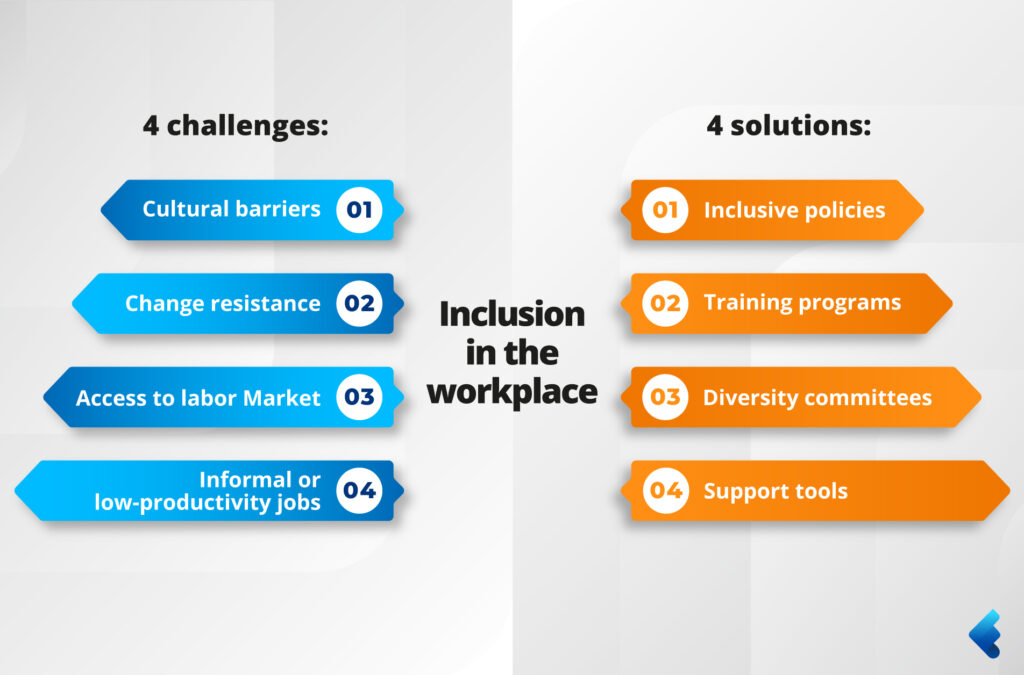 Image Source: Serviap Global
A Framework for Practicing Inclusion Daily
Inclusion isn’t achieved in workshops—it’s built in the everyday. Here’s a simple four-part framework:
- Awareness – Use tools like the Leadership Circle Profile to uncover blind spots. Are reactive tendencies (controlling, protecting, complying) undermining your inclusivity?
- Intention – Set a daily or weekly inclusion goal. Example: in every meeting, ensure at least one new voice is heard.
- Action – Practice inclusive behaviors: empathetic listening, asking diverse perspectives, challenging biased systems.
- Accountability – Seek feedback from those most impacted. Inclusion is best measured not by your intention but by others’ experience.
Practical Steps Leaders Can Take This Week
- In your next meeting: Ask, “Who hasn’t spoken yet?”
- In your decision-making: Write down whose perspectives influenced the outcome. Notice who is missing.
- In your one-on-ones: Ask each person, “Do you feel your perspective is valued here? What could I do differently?”
- In your recognition: Celebrate not just outcomes, but inclusive behaviors that helped achieve them.
Small actions, consistently practiced, create systemic change.
The Payoff of Inclusive Leadership
When leaders commit to inclusion, the payoff is undeniable:
- Teams innovate faster because more ideas surface.
- Engagement climbs because people feel valued.
- Reputation strengthens, making it easier to attract top talent.
- Leaders themselves grow—not just in skill but in humanity.
At its core, inclusive leadership isn’t about checking a box. It’s about leading in a way that unlocks human potential—in others and in yourself.
Conclusion: Leading Forward
Inclusive leadership requires courage. It asks leaders to look inward, confront discomfort, and build new habits. But it also offers extraordinary rewards: resilient teams, loyal employees, and organizations that thrive.
The question is no longer “Should I lead inclusively?” It’s “What will I do today to expand inclusion?”
At Leadership Circle, we believe inclusive leadership is central to the evolution from reactive to creative leadership. It’s not just about embracing diversity—it’s about unleashing the full brilliance of people.
Are you ready to deepen your inclusive leadership practice? The tools and programs at Leadership Circle help leaders uncover hidden patterns that limit inclusivity and equip them to lead with courage, connection, and authenticity. Schedule a consultation to get started.





This post was extremely informative — very clear and actionable advice.
Insightful post — I’d be interested in a follow-up on advanced topics.
This is one of the best articles on the topic I’ve seen recently.
Concise and informative. I learned something new today.
Your writing style is engaging and easy to follow. Keep it up!
Great mix of research and practical application. Very helpful.
Great information shared.. really enjoyed reading this post thank you author for sharing this post .. appreciated
Amazing breakdown — the numbered steps made it easy to follow.
Your writing is not only informative but also incredibly inspiring. You have a knack for sparking curiosity and encouraging critical thinking. Thank you for being such a positive influence!