

The first three months of any new role dictate the trajectory of an employee’s tenure. As a leader, you face a distinct mandate: transform fresh talent into engaged, high-performing team members swiftly and effectively.
When you bring someone new into your organization, you are making an investment in their potential. Realizing that potential requires more than a standard orientation checklist. It requires a deliberate strategy that aligns the new hire’s capabilities with your organizational goals.
Defining the 30-60-90-Day Plan
A 30-60-90-day plan is a strategic framework that maps out a new hire’s goals, priorities, and milestones over their first three months. It breaks the onboarding process into three manageable phases. Instead of overwhelming a new team member with immediate demands, this document provides a clear, progressive path from initial learning to full autonomy.
Think of it as a shared contract of success. It outlines exactly what the individual needs to learn, who they need to meet, and what they need to achieve by specific dates.
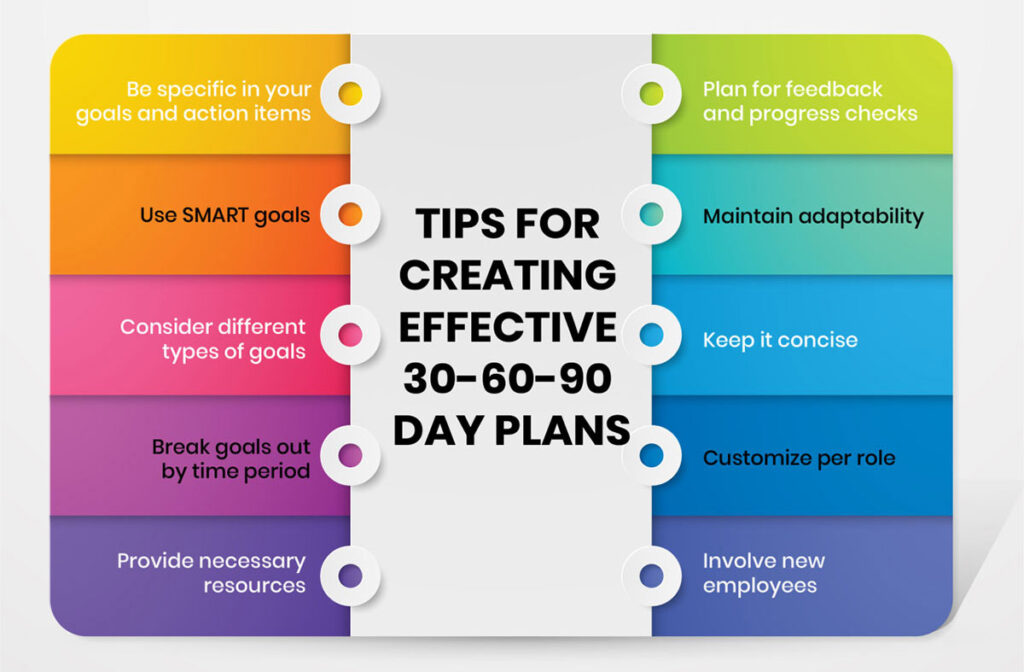 Image Source: Talent Management Institute
Why the First Three Months Matter
Without a clear map, new hires often drift. They spend too much time trying to decode unwritten rules and too little time making an impact. Strong leaders use these structured plans to remove ambiguity and foster true accountability.
When we define expectations clearly on paper, we reduce the anxiety that often accompanies a job transition. This clarity accelerates the time it takes for an employee to become fully productive. Furthermore, collaborating on this plan builds a vital foundation of trust. It shows the new hire that leadership is actively invested in their success, which directly boosts early engagement and long-term retention.
Structuring the Three Phases of Integration
Effective leaders know that pacing is critical. You must guide your new team members through a logical progression of learning, doing, and owning.
Days 1 to 30: Alignment and Discovery
During the first month, the primary objective is absorption. Your new hire needs space to understand the company culture, grasp internal processes, and build foundational relationships. Output expectations should remain modest while they focus on building context.
As a leader, prioritize these elements for the first 30 days:
- Relationship mapping: Identify the key stakeholders and peers the new hire must connect with.
- Cultural immersion: Guide them to understand company values and team dynamics.
- System proficiency: Ensure they master the basic tools, platforms, and workflows required for their role.
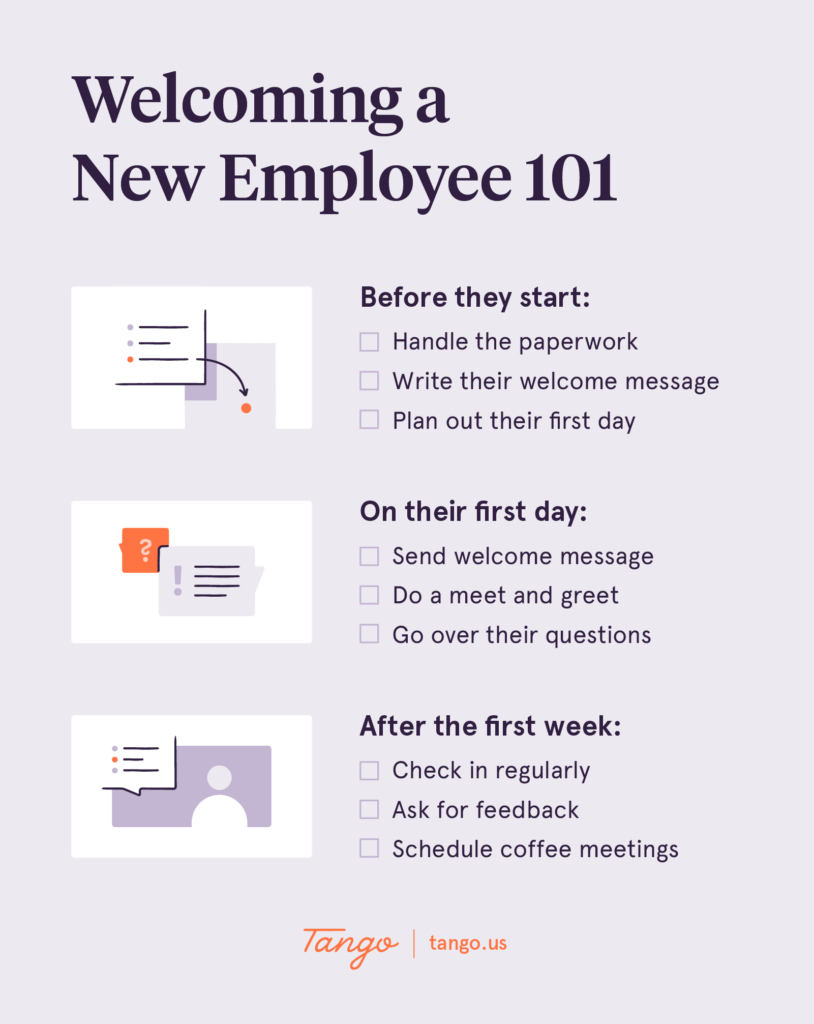
Image Source: Tango
Days 31 to 60: Action and Collaboration
The second month marks the transition from observer to active participant. The new hire should begin applying their early learnings to tangible tasks. They will start taking on specific assignments, usually working closely alongside veteran team members.
Your focus as a leader during this phase should include:
- Guided execution: Assign projects that allow them to practice core skills with a safety net.
- Cross-functional teamwork: Encourage them to contribute to group meetings and collaborative efforts.
- Feedback loops: Implement regular check-ins to course-correct and reinforce positive behaviors.
Days 61 to 90: Autonomy and Impact
By the third month, the training wheels come off. The employee should now operate with a high degree of independence. They understand the landscape and can execute their daily responsibilities confidently.
During this final transition phase, guide them toward:
- Independent problem-solving: Empower them to tackle challenges without seeking constant approval.
- Process improvement: Invite them to share fresh perspectives on how to optimize existing workflows.
- Measurable results: Hold them accountable to specific performance metrics and project deliverables.
Tailoring the Blueprint by Role and Level
A rigid, one-size-fits-all template will fail. You must customize the 30-60-90-day plan to fit both the specific demands of the role and the experience level of the individual.
For frontline specialists or individual contributors, the plan should lean heavily on technical skills, product knowledge, and daily operational targets. A software developer, for example, needs to focus on code review processes and shipping their first feature.
For management and executive roles, the focus shifts entirely. A new leader must prioritize strategic alignment, team assessment, and cross-departmental influence. An executive’s first 30 days might consist solely of listening tours and reviewing financial health, while their 90-day mark might involve proposing a major strategic pivot or restructuring a department.
Ultimately, your ability to integrate talent dictates the strength of your organization. By leveraging a structured 30-60-90-day plan, you empower your people to step into their roles with confidence, purpose, and a clear vision of success.