
Pressure is a permanent fixture in executive leadership. When you sit at the helm of an organization, the stakes are invariably high. But when normal concern curdles into chronic worry, it clouds your judgment, stifles innovation, and paralyzes your teams.
Uncertainty is unavoidable, but suffering through it is optional. By the end of this guide, you will understand how to transform paralyzing anxiety into strategic momentum. We will walk through a three-step framework specifically designed for leaders: defining the exact risk, making peace with potential hardship, and taking purposeful action to forge a better outcome.
The Hidden Cost of Executive Anxiety
Unchecked worry drains your cognitive resources and signals instability to your entire organization.
When you face volatile markets, shifting team dynamics, or fierce competition, ambiguity breeds anxiety. If you allow worst-case thinking to run rampant, you lose the ability to make clear, objective decisions. Your team senses this hesitation, which degrades organizational trust and momentum. To lead effectively, you must channel nervous energy into structured problem-solving.

Image Source: Matters of the Mind
Step 1: Define the Real Risk
Strip away the emotion and identify the exact worst-case scenario.
Anxiety feeds heavily on the unknown. When confronted with a high-stakes problem, the human brain tends to catastrophize in vague, overwhelming terms. You might think, “This merger is going to be a disaster,” or “We will lose all our market share.” The most potent antidote to this vague dread is extreme clarity. You must ask yourself: what is the absolute worst outcome that could logically happen here?
Separate Facts from Fiction
To define the risk, you have to write it down. Putting your fears on paper forces your brain to switch from an emotional state to a logical one. Name the specific, tangible threat.
Keep your assessment grounded in reality. You want to identify the most likely worst-case scenario, not an apocalyptic fantasy. By intentionally defining the boundaries of the worst possible outcome, you remove the terrifying uncertainty from the equation. You shrink an invisible monster down to a manageable, visible problem.
Step 2: Make Peace with the Possibility of Difficulty
Accept that the worst case might happen, which neutralizes its emotional power over you.
Once you clearly define the worst-case scenario, you must mentally accept it as a distinct possibility. This is not defeatism. It is strategic acceptance. When you fiercely resist a potential reality, you burn immense amounts of energy. By saying, “If this happens, it will be difficult, but we will survive,” you immediately reclaim your cognitive bandwidth.
The Difference Between Pain and Suffering
In leadership, pain is inevitable, but suffering is a choice. Missing a critical Q3 revenue target is a painful business reality. Losing sleep for six weeks anticipating that you might miss the target is suffering.
To break this exhausting cycle, you must look at the worst-case scenario and accept the consequences. Once you make peace with the downside, the fear loses its grip. You stop operating from a place of desperation and return to a place of power.
Step 3: Take Purposeful Action to Improve the Outcome
Pivot your energy from worrying about the outcome to actively mitigating the risk.
You have defined the exact risk. You have accepted the potential fallout. Now, you get to work. You do not sit back and wait for disaster to strike. You leverage your position and resources to improve upon the worst-case scenario.
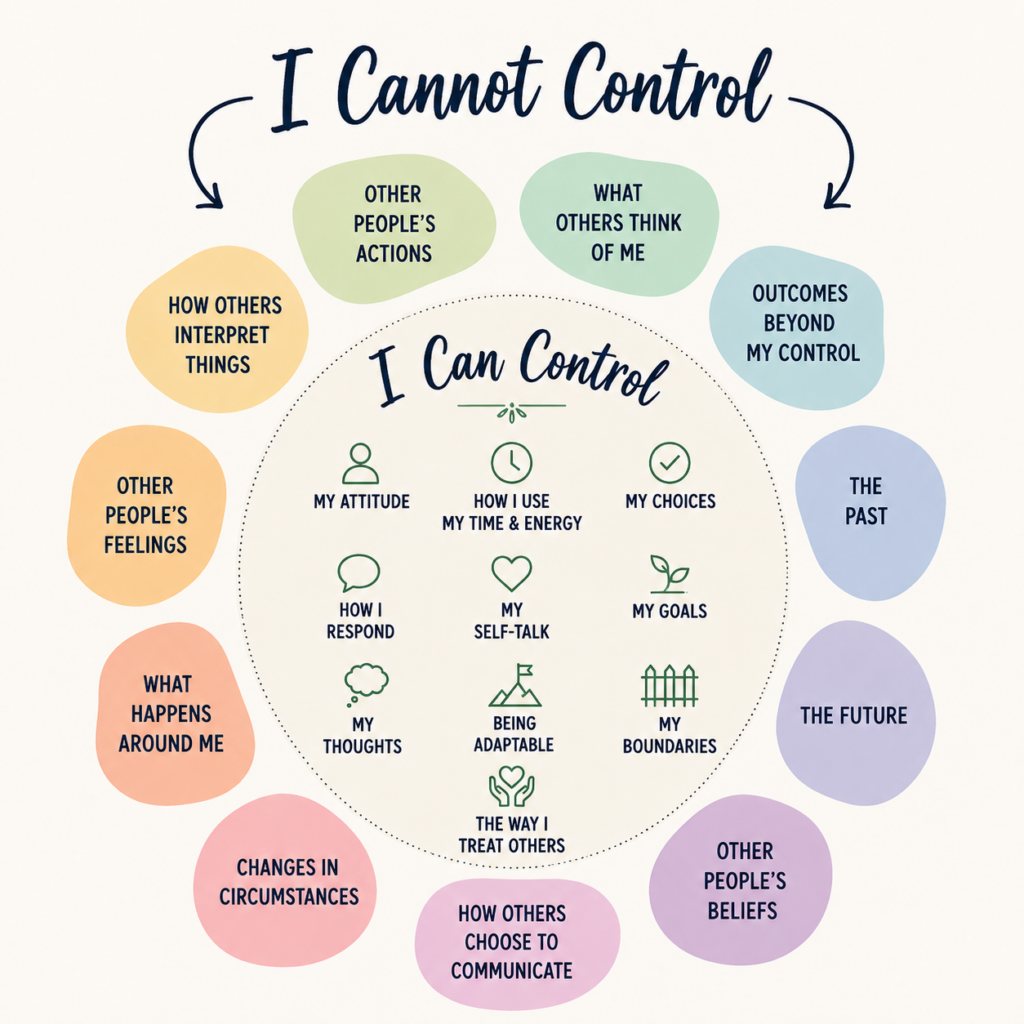
Map Your Locus of Control
Focus exclusively on the levers you can pull right now. Follow this rapid checklist to guide your action:
- Identify immediate variables: What aspects of this situation can you directly influence today?
- Allocate resources: Who on your team is best equipped to mitigate this specific risk?
- Establish milestones: What are the short-term indicators that the situation is improving?
- Communicate clearly: How can you align your team around this new, proactive strategy?
When you work tirelessly toward a better-than-worst-case scenario, you frequently avoid the worst outcome entirely.
The 3-Step Framework in Practice
Let us explore how this method applies to common, high-stakes leadership challenges.
Navigating Organizational Change
You are leading a massive structural reorganization. Rumors are swirling, and team morale is plummeting.
- Define the risk: The worst realistic outcome is that three of your top-performing directors resign out of frustration, delaying the transition by six months.
- Make peace: You accept that you cannot force people to stay. If they leave, you have a deep bench of talent and an experienced recruiting team. It will hurt, but the company will not collapse.
- Take action: You stop worrying about rumors and start having one-on-one retention conversations with your key players. You clarify their future roles and give them a voice in the transition process.
Handling High-Stakes Financial Targets
A major client is threatening to pull their contract, which would devastate your annual projections.
- Define the risk: The worst outcome is losing the account, resulting in a 15% revenue shortfall for the year and a tense conversation with the board.
- Make peace: You accept that the client has the right to leave. If you lose the revenue, you will need to adjust operational budgets and face the board transparently. You have survived tough board meetings before.
- Take action: You immediately dispatch your best account executives to uncover the root of the client’s dissatisfaction. Simultaneously, you pivot your sales team to aggressively pursue two strong pipeline prospects to offset the potential loss.
Managing Executive Team Conflict
Two of your C-suite executives are locked in a bitter dispute over resource allocation, threatening to derail a product launch.
- Define the risk: The worst outcome is that the conflict paralyzes the department, the product launches late, and one executive eventually quits.
- Make peace: You accept that executive turnover and delayed launches happen. If it comes to that, you will step in as the interim decision-maker and find a replacement.
- Take action: You remove the ambiguity by calling a mandatory mediation session. You lay out strict parameters for the launch timeline and require both leaders to present a unified compromise within 48 hours.
Common Mistakes When Applying This Framework
Even experienced leaders can stumble when trying to manage their internal responses to stress. Here are a few pitfalls to avoid.
Over-Catastrophizing
Do not let your definition of the worst-case scenario spiral into absurdity. If a product launch fails, the company will likely lose money and time. The company will not instantly go bankrupt and cease to exist. Keep your risk definition grounded in immediate, logical consequences.
Skipping Acceptance
Many leaders define the risk and immediately jump to action. If you skip the acceptance phase, your actions will be driven by panic rather than strategy. You must pause to internally accept the potential downside. This pause is where true executive presence is forged.
Conclusion
Leadership is a constant exercise in managing the unknown. When you let worry dictate your mindset, you forfeit your greatest asset: clear, strategic thought.
By applying this simple three-step framework, you can fundamentally change how you process professional pressure. Define the exact nature of the risk to remove the fear of the unknown. Make peace with the possibility of a difficult outcome to reclaim your emotional energy. Finally, take purposeful, targeted action to improve the situation based on what you can control.
Key takeaway: You cannot eliminate uncertainty from the business landscape, but you can control how you respond to it.
Your next step is to test this framework today. Take the single business issue that is currently causing you the most stress, write down the absolute worst-case scenario, and map out three actions you can take this afternoon to improve it.