
In a moment when organizations are being asked to move faster, adapt continuously, and build resilience from within, the ability to develop others is no longer optional—it is essential to how leadership endures and expands its impact. What becomes possible when leadership is measured not only by what we achieve ourselves, but by the capacity we help create in others?
When I look back on the moments that most shaped me as a leader, they were rarely the comfortable ones. They were the moments when someone cared enough about me—and about who I was becoming—to tell me the truth.
One of those moments came early in my career, in my 20s. I had a mentor named Hugh Knop who looked at me one day and said something I didn’t particularly want to hear. He said, “I can’t figure out how someone at 21 can have such fixed opinions. You act more like you’re 65.”
That landed hard.
He was pointing out my rigidity—how convinced I was that I already had all the answers. And he was right. That feedback helped me loosen my grip on certainty and open myself to learning in a way that changed the trajectory of my leadership. He didn’t say it to put me down. He said it because he believed there was more in me.
Years later, another mentor—this time a client named Steve Ewing—gave me feedback that was just as direct. He said, “You tend to exaggerate. If it’s seven, you say it’s 10. And it takes away from your credibility.” Then he added something I’ve never forgotten: “The truth is good enough. You’re remarkable. You have had an incredible impact. Don’t exaggerate it.”
That was straight feedback. Difficult. And it stuck.
Thirty-five years later, I still catch myself making sure I’m precise and grounded in what I say. That one conversation made me more effective for decades.
These experiences capture the heart of the Mentoring and Developing dimension in the Leadership Circle Profile. Real mentoring is not about coddling or making people comfortable. It’s about caring enough to step into the conversations that serve another person’s growth. It requires honesty, courage, and a genuine commitment to the person in front of you.
Great leadership is never only about personal performance. At its best, leadership multiplies. It grows capacity beyond the self. It develops strength, wisdom, and confidence in others so that leadership can extend farther than any one individual ever could. Organizations become stronger, more resilient, and more future-ready when leaders intentionally develop leadership around them.
Of course, that development also requires coachability—openness, humility, and the willingness to hear what may challenge your self-concept. But when mentorship meets coachability, something powerful happens: learning accelerates, trust deepens, and leadership capacity expands.
The invitation for every leader is simple, though never easy: Don’t just lead well. Develop others well.
Tell the truth with heart. Manage your own reactivity. Offer feedback in service of growth. Remember that a single courageous conversation today may shape someone’s leadership for years to come.
That’s mentoring. That’s development. And that’s how leadership multiplies.
Bill Adams, Co-Founder and CEO
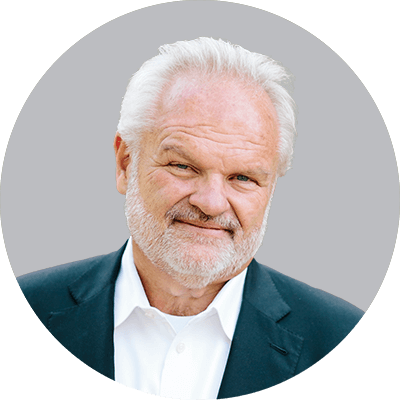
Bill Adams loves people and is passionate about relationships, leadership, and business. He is a serial entrepreneur who has started, owned, and sold multiple businesses. As a founder and the current CEO of Leadership Circle, Bill brings 30 years of experience to his clients—the CEOs of major Fortune 500 corporations, nonprofits, and private equity startups. In addition, Bill co-authored Mastering Leadership and Scaling Leadership. As a trusted advisor, teacher, consultant, and coach, he works with CEOs and top teams in fulfilling the promise of leadership.