
The workplace has been changing in plain sight. Think blended work schedules, AI copilots, DEI practices, and skills you didn’t even hear about five years ago. They are the new baseline!
But as a business leader, you don’t just react to what’s in front of you; You ought to think one step ahead. That way, your people, processes, systems, and culture won’t get left behind. And that your business will continue to grow and succeed!
Fret not. This page offers insights into the workplace trends in 2026 you ought to know as a leader. Keep on reading to learn how to prepare for these new realities this year…and beyond.
Trend 1. The Rise of Hybrid Work Setups
Hybrid work blends onsite and offsite days, yes, in a structured way. It isn’t “work from anywhere” chaos; It isn’t a full return to five days in the office. It’s a design choice. For many organizations, it’s becoming the default for remote-capable roles.
“Hybrid work succeeds when companies move beyond simply allowing remote days and instead design systems that support collaboration, accountability, and clarity,” says Conrad Wang, Managing Director of EnableU. “Leaders who establish clear expectations, shared working hours, and transparent workflows create environments where distributed teams can perform at their best without losing alignment.”
We’re already living in this shift. According to WFH Research, nearly 40% of employees work remotely in some capacity. While more than 60% have returned to the office, 27% operate in a hybrid setup, and over 12% work fully from home.

The most effective hybrid workplaces, however, create structured flexibility.
First, set core collaboration hours when everyone’s available and set definite record-keeping procedures. Also, invest in technology, such as contract management software that defines terms and makes participation seamless amid remote work. Remember, hybrid work is productive when employees know exactly when and how to connect with their teams.
Hybrid succeeds when it’s designed. You don’t just assume as a leader. Here’s what to do:
- Spot a specific problem and create definable objectives rather than simply acquiring new technology.
- Incorporate people back into the process and give employees the opportunity to use their newly created free time as efficiently as possible.
- Plan and budget for change management in order to create a successful implementation plan.
- Develop guardrails that secure both responsible AI and Data Privacy from the very beginning.
- Provide the teams with training (upskilling) as soon as possible to ensure they use the technology successfully.
Trend 2. Technological Integration and Automation
The tech story of the next two years is less about novelty and more about scale. Generative AI, automation, extended reality, and data platforms are moving from pilot projects to everyday tools. Gartner projects that by 2026, more than 80% of enterprises will have used generative AI APIs and models or deployed gen AI–enabled applications in production environments.

The World Economic Forum estimates that technological change will both displace and create roles by 2027. This entails a net shift of millions of jobs and significant reskilling needs. But as automation will change the shape of work, humans will still be at the center of it.
Smart automation is designed to enhance human potential. It eliminates routine, repetitive tasks, thus freeing up your employees’ time to work creatively. For example, you can automate your newsletter templates ready for content layouting and publishing. That way, your creative team can spend time developing quality content that engages and converts.
As a leader, you’re responsible for deploying technology into your organization. Here’s what you can do:
- Focus on solving real business challenges, not just adopting tools for novelty.
- Keep humans involved at every stage (AI design, testing, deployment, optimization).
- Budget time and resources for decision-making processes, even changing workflows.
- Set clear guardrails or rules for AI use and sensitive data from day one.
- Train teams early and consistently so AI becomes part of everyday work.
As organizations accelerate digital transformation, many partner with IT companies based in Colombia or other parts of South America for specialized engineering talent. These teams build automation, enterprise platforms, and AI solutions while providing strong time-zone alignment with North America.
As these modernization initiatives expand, organizations also need cloud platforms that can support AI workloads, enterprise applications, and large-scale data processing. Leveraging experienced google cloud consulting services helps businesses design secure cloud architectures, migrate mission-critical workloads, optimize cloud costs, and implement scalable data and AI solutions. This enables companies to accelerate digital transformation while maintaining performance, governance, and compliance across their cloud environments.
Trend 3. Focus on Mental Health and General Well-being
Mental health is no longer a side conversation; it’s part of business performance. But the World Health Organization (WHO) has long recognized burnout as an occupational phenomenon, as many employees suffer from this psychological strain.
In fact, employees in toxic workplaces are significantly more likely to report poor mental health. About 58% rate their mental health as fair or poor compared to 21% in non-toxic environments. They are also more likely to report mental health harm at work (52% vs. 15%), citing that their employer underestimates the issue (77% vs. 49%).

Supporting wellbeing means protecting employees’ physical and mental health through clear occupational health and safety practices. This includes offering workers’ compensation with a straightforward work-injury claim process for injured employees seeking proper compensation or medical assistance. Ultimately, sustained well-being improves when employees know their health is protected.
Further, wellbeing initiatives work best when they’re woven into daily workflows:
- Offer flexible mental health days.
- Train managers in emotional intelligence.
- Create safe spaces for open conversation.
Remember, engagement increases and turnover drops when workers sense genuine support.
Further, supporting well-being means workload norms that ward off burnout and managers who know how to spot and address stress. It also means measuring the basics (time off taken, after-hours communication, meeting load) and adjusting before problems balloon. Ultimately, it entails establishing work-life balance for leaders and their teams.
Trend 4. Diversity, Equity, and Inclusion (DEI) at the Forefront
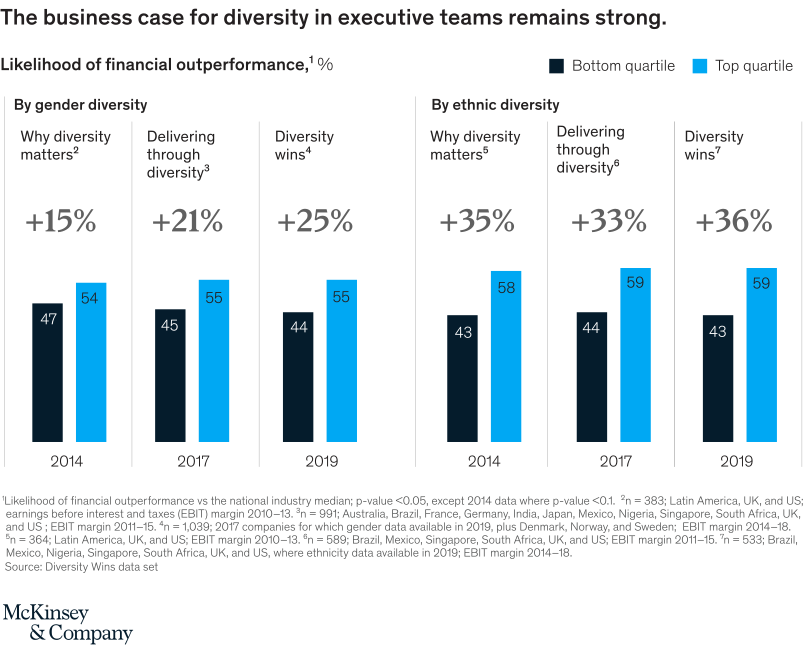
DEI has matured from “nice to have” to a core performance driver. Why? Diverse and inclusive teams innovate more and perform better. McKinsey found that companies in the top quartile for gender diversity on executive teams were 25% more likely to have above-average profitability, and those in the top quartile for ethnic diversity were 36% more likely.
Effective DEI calls for checking every aspect of the employee journey. Here’s how:
- Review your hiring processes, promotion criteria, and meeting dynamics for unconscious bias.
- Create employee resource groups with real influence and budget.
When different viewpoints shape decisions at every level, organizations tap into perspectives that drive innovation and market relevance.
In practice, DEI also shows up in everyday choices that make employees feel noticed and included. Simple actions like offering custom hoodies in inclusive sizing and neutral designs ensure all employees feel represented, regardless of background. Ultimately, these small yet thoughtful decisions reinforce a sense of belonging.
It takes time to be an inclusive leader in today’s work environment. For 2026, anticipate more:
- Formalized and audited pay equity review processes
- Transparency in promotion opportunities
- Inclusive meeting practices
- ERGs directly connected to business results.
The leaders who continue to advance toward this goal will approach inclusion as a daily routine, rather than a quarterly report.
Trend 5. Skills Development and Lifelong Learning
According to the World Economic Forum, analytical thinking, creative thinking, and AI and big data literacy top the list of in-demand skills through 2027. Resilience, flexibility, and systems thinking aren’t far behind. What skills must you develop, and what learnings must you earn?

Organizations that will thrive treat learning as a core business function. As an effective leader, here’s what you can do:
- Allocate dedicated time for skill development.
- Create mentorship networks.
- Reward knowledge sharing.
- Partner with educational institutions for specialized training.
Companies that set aside focused learning time, tie skills to career paths, as well as invest in micro-credentials see better adoption. LinkedIn’s Workplace Learning Report shows steady growth in L&D budgets and a strong link between manager involvement and learning engagement. Over 90% of L&D professionals believe continuous learning is more important than ever for career success.
If you’re starting now, map the skills your strategy actually needs over the next 12–24 months. Then make learning so accessible and expected that opting out feels odd.
Trend 6. Leadership Role in Shaping Future Workplaces
Technology and policy matter. Leadership makes both work or fail. The next wave of effective leaders will be calm experimenters who build trust and move quickly when the data points to change.
Jeffrey Zhou, CEO and Founder of Fig Loans, notes: “Modern leadership is increasingly defined by adaptability. Organizations are navigating rapid technological and workforce shifts, and the leaders who succeed are those who remain transparent, communicate clearly during change, and invest in developing their teams’ skills for the future rather than focusing only on short-term results.”
But here’s the problem: Only 40% of leaders say their organization has high-quality leadership. This is a sharp decline from two years ago and a return to levels seen in the aftermath of the early 2010s economic crisis.

Further, tomorrow’s effective leaders cultivate psychological safety and embrace experimentation. Here’s what you can do:
- Share your own learning journey
- Celebrate intelligent failures
- Actively seek diverse perspectives
Leaders who model vulnerability and continuous growth inspire teams to innovate fearlessly and adjust swiftly to change.
This isn’t soft stuff; It’s operational.
Leaders who set clear priorities, engage employees, reduce noise, and reward learning create momentum. They assign owners, not committees. They run small pilots and scale what works. They talk about trade-offs openly. And they keep connecting today’s tasks to tomorrow’s strategy so people know why their work matters.
Final Note
The 2026 workplace is taking shape now:
- Hybrid as a designed norm,
- AI as a work partner,
- Well-being as a performance factor,
- DEI as a driver of innovation,
- Learning as an everyday rhythm, and
- Leadership as the force that makes it all work.
Start with a few focused moves: Tighten your hybrid playbook and launch a responsible AI pilot. Likewise, measure and normalize wellbeing practices as well as fund DEI with real ownership. Finally, give your people the time to learn.
You’ll be surprised: In six months, you’ll feel the difference, and in two years, you’ll be glad you didn’t wait! As a leader, you are responsible for keeping up with the labor workforce trends this year. If you need help and guidance with this, consider leadership development services. To get started, get in touch today!
Maya Kirianova is a guest contributor to the Leadership Circle blog.
About the Writer: Maya Kirianova is a freelance writer with a passion for crafting engaging content that spans various niches ranging from technology to business. With a strong foundation in these industries, she delivers insightful and well-researched content that helps businesses and individuals navigate the complexities of the financial world.