
What becomes possible when leadership stops being about individual excellence and starts unlocking collective intelligence? As work grows more complex and interdependent, the leaders who create the greatest impact are those who can bring people together in ways that spark shared ownership and new thinking.
Many of us rise into leadership because we are capable. We’re smart. We deliver results. We know how to move things forward. And for a time, that works. But as our roles grow more complex, the work eventually becomes too big, too interdependent, and too nuanced for any one person to carry alone.
That’s when collaboration becomes essential.
But let’s be clear: collaboration isn’t consensus-building or polite agreement. Real collaboration asks something deeper of us. It requires shared ownership of the work and a willingness to engage differences, perspectives, and disciplines in a way that produces something new.
I’ve had the opportunity to see this kind of collaboration in action through the development of Unity Academy, a community of transformation and master school designed to help leaders tackle ever more complex systems while staying connected to meaning and purpose. I have deep respect for Bob Anderson’s leadership in bringing that work into being—not because collaboration comes naturally to him, but because it doesn’t.
Bob has often told me his instinct is to create things on his own. Many of us know that impulse well: If you want something done right, do it yourself. Yet the scope of Unity Academy required something different. The work called for bringing together world-class thinkers and practitioners from different fields—people who had spent decades developing their own frameworks and bodies of work. No single person held all of the knowledge required.
What I saw during the development process was Bob stepping directly into the challenge of collaboration—sometimes wrestling with it, sometimes naming when it was hard, and continuing to bring people together, anyway. Over time, a remarkable faculty emerged—different expertise, different life paths, and a shared commitment to exploring the deeper dimensions of leadership and human development.
At the heart of collaboration is respect—real respect for the intelligence, experience, and gifts that others bring. When that respect is present, people feel invited to contribute their very best, and the work becomes something shared rather than owned by any single individual.
In the Leadership Circle Profile®, the Collaborator dimension reflects this capacity. It signals a leader who can build shared purpose, invite contribution, and create the conditions where collective intelligence can emerge. After all, a great leader is one who invites great thinking.
The move from individual excellence to collective intelligence marks an important threshold in leadership development. It asks us to move beyond the need to have the answer and instead create the conditions where the best answers can emerge.
When that happens, something remarkable becomes possible. We don’t just work better together—we create outcomes that matter, outcomes none of us could have achieved alone.
Bill Adams, Co-Founder and CEO
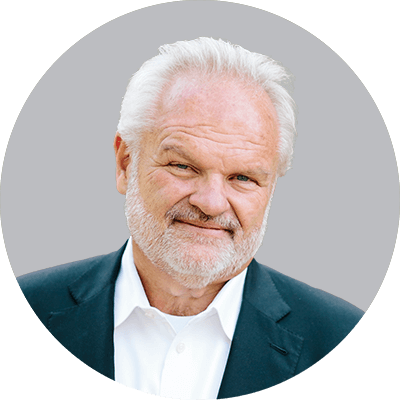
Bill Adams loves people and is passionate about relationships, leadership, and business. He is a serial entrepreneur who has started, owned, and sold multiple businesses. As a founder and the current CEO of Leadership Circle, Bill brings 30 years of experience to his clients—the CEOs of major Fortune 500 corporations, nonprofits, and private equity startups. In addition, Bill co-authored Mastering Leadership and Scaling Leadership. As a trusted advisor, teacher, consultant, and coach, he works with CEOs and top teams in fulfilling the promise of leadership.